

0 引言
在冰体力学试验方面,Schulson[3]进行了冰体的破坏试验,研究冰体由韧性向脆性转变问题;肖赞[4]采用巴西试验法对黄河冰进行加载试验,获得了冰的抗拉强度值,根据结果论证了巴西试验法在冰的抗拉强度与断裂韧度试验中的适用性;Suzuki等[5]进行了弹丸的高速冲击侵彻试验,通过试验建立了用以描述表面力的分析模型。在爆破破冰方面,王莹等[6]建立了药量、爆距、冰厚与破冰半径的灰色关联系数及关联度,获得破冰半径的影响因素的主次关系;平源等[7]利用相似理论分析了水下爆炸冲击波对冰盖的切割过程,结果表明建立的相似律模型适用于爆炸切割冰盖过程。关于弹体侵彻冰体的研究较少,其中史兴隆等[8]设计了高能破冰弹并建立了数值分析模型,对高能破冰弹侵彻冰盖以及水下爆炸破碎冰盖的过程进行数值模拟研究,研究结果为破冰弹的优化设计以及破冰排凌提供了理论支持。
以破冰弹药破冰为研究基础,对制式弹药侵彻毁伤冰体的过程进行研究,进行高速弹体侵彻毁伤试验。试验结果表明,冰体在高速侵彻冲击作用时出现严重的冰体裂纹扩展,有限尺寸的冰体在受到冲击后,会发生剧烈的冰体爆炸。弹体在侵彻过程中,被甲破坏严重,但弹体钢芯基本保持完整。采用有限元分析方法建立数值计算模型,针对试验工况进行仿真验证,讨论弹体着靶速度以及冰体厚度改变时,对侵彻的影响。研究结果对于指导破冰弹体设计及使用过程中效果的最大化提供了重要的参考,研究对防灾减灾、高原极地区域作战等方面具有实际工程应用价值。
1 冰体侵彻射击试验
1.1 试验器材及冰体制作
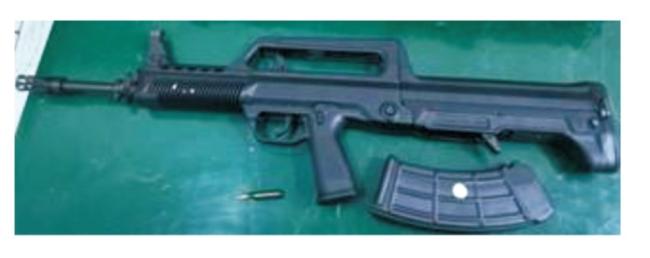
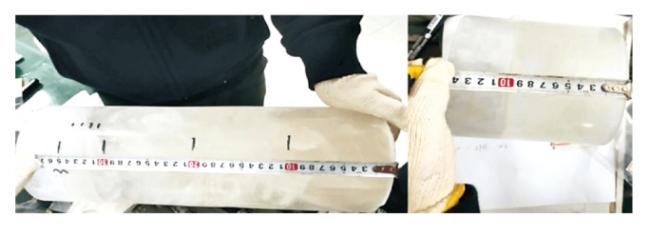
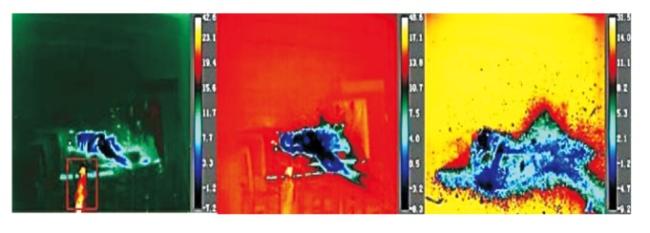
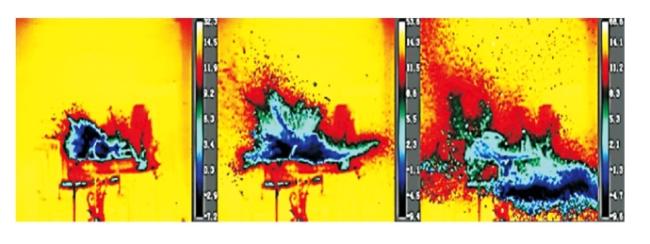
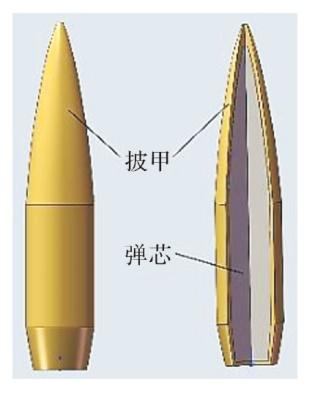
试验采用95-1式制式步枪,如图1所示,弹种为5.8 mm制式步枪弹。试验采用高速摄像记录弹体侵彻冰体的过程及弹丸的飞行姿态,采用红外摄像对冰体侵彻试验过程中的温度场进行拍摄与图像采集。
1.2 试验步骤
1)开启高速摄像机及红外摄像机,将冰体安装固定在靶架上,拍照记录;
2) 射手进入射击位置,其余试验人员撤离至安全位置,做好隐蔽;
3)射击结束,采集试验图像与数据,拍照记录试验后冰体,保存并处理高速摄像机及红外摄像机的拍摄图像;
4)清理试验现场,准备下一次试验;
5)清理试验场地,剩余弹药入库保存。
1.3 试验结果分析
1.3.1 侵彻35 cm厚度冰体
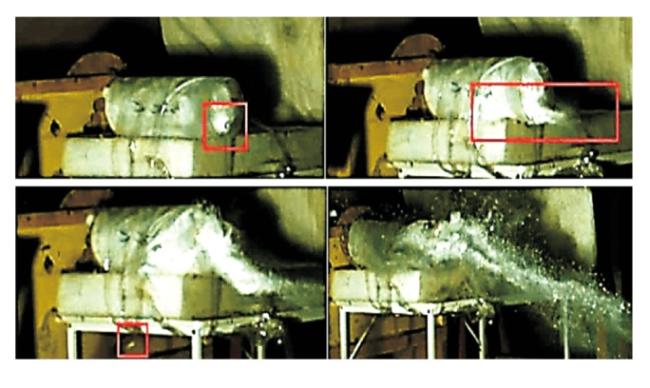
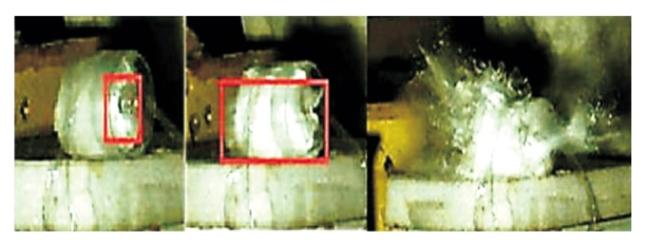
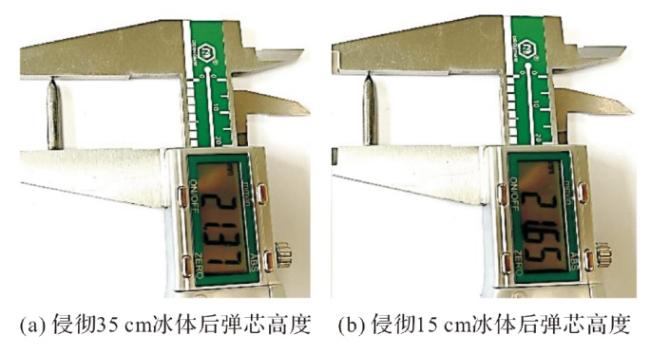
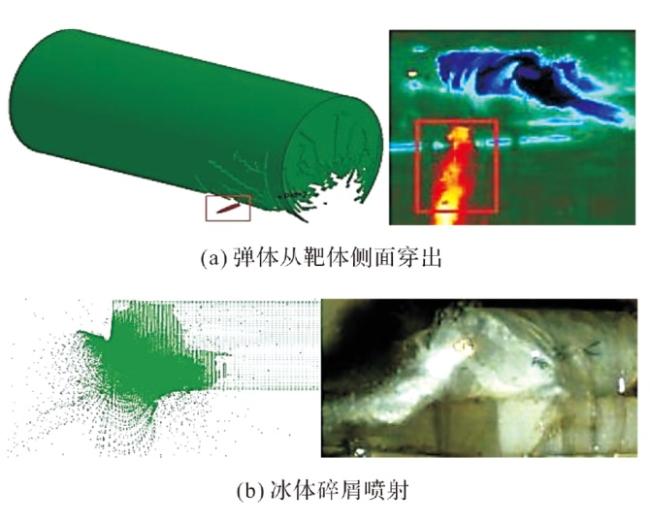
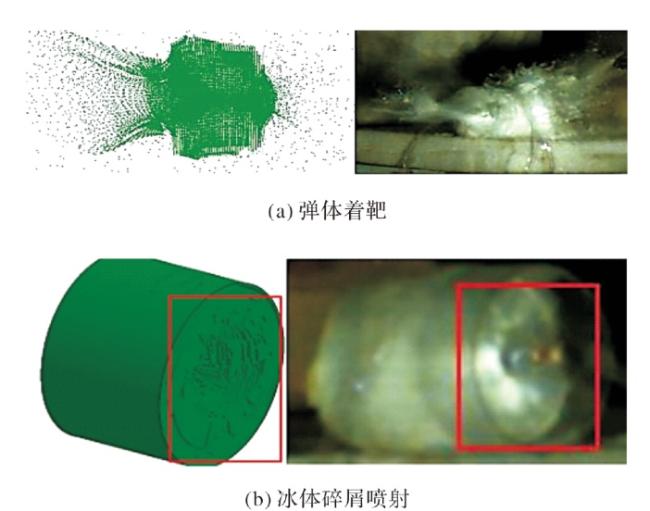
射击后弹体命中位置为冰体中心偏下,偏离冰体中心,当弹体着靶后,冰体的受弹面弹孔周围出现毁伤破坏区域,随后弹体侵彻进入冰体内部,同时受弹面上弹孔向外喷射冰体碎屑粉末,冰体内部受到弹体侵彻出现裂纹扩展与冰体的破坏,弹体从靶体侧面穿出,冰靶体整体炸裂破碎,如图3所示。
1.3.2 侵彻10 cm厚度冰靶体
2 数值计算
2.1 建立计算模型
2.2 弹体与冰体材料属性
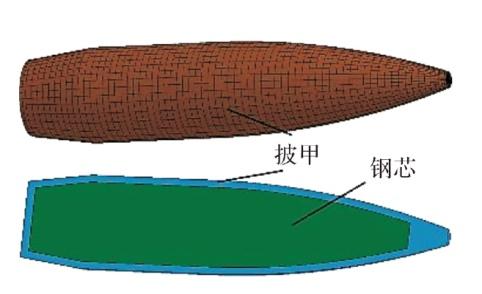
数值模拟计算中使用的5.8 mm小口径步枪弹铜质被甲材料采用Johnson-Cook本构模型,对于大变形、高应变率下和高温条件下的材料属性,Johnson-Cook本构模型能够进行有效的描述。Johnson-Cook模型在大应变情况下的本构关系方程为[9]:
σ=(A+B )(1+cln )(1-T*m)
式中:A为静态屈服强度;B为应变硬化系数;c为应变率敏感系数;n为应变硬化指数;m为温度系数; 为等效塑性应变; 为等效塑性应变率;无量纲温度T*=(1-Tr)(Tm-Tr),其中Tr为环境温度,Tm为材料熔点温度。
Gruneisen状态方程定义的压缩材料压力为[10]:
P= +(γ0+aμ)E
式中:ρ0为材料密度;C为us-up曲线的截距;γ0为Gruneisen常数;a是对γ0的一阶体积修正;S1、S2、S3为us-up曲线斜率的系数;E为杨氏模量;μ为相对体积压缩状态,用状态方程定义为:
μ= -1
其中:V为材料体积。
状态方程定义膨胀材料的压力为[11-13]:
P=ρ0C2μ+(γ0+aμ)E
2.3 计算模型验证
3 着靶速度对侵彻的影响
5.8 mm弹药的有效射击距离约为400 m,选取距靶体100 m、200 m、300 m、400 m时的弹体速度,分别为840 m/s、743 m/s、657 m/s、581 m/s,进行不同着靶速度下弹体对冰体的侵彻数值模拟,并对计算结果进行分析研究。
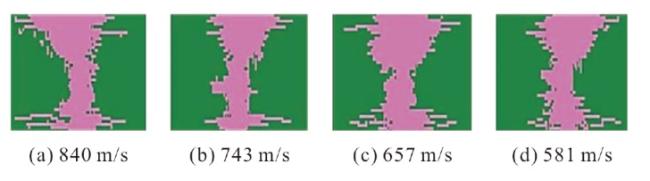
不同着靶速度下弹体对冰体侵彻的侵彻过程以及破坏毁伤区域如图14所示,当弹体速度减小时,在一定程度上削弱了小口径弹药侵彻过程中的偏转与失稳,从而提高了弹体在侵彻过程中的稳定性,着靶速度为581 m/s的侵彻几乎未发生明显的偏转,着靶速度为743 m/s时,偏转程度最为严重。
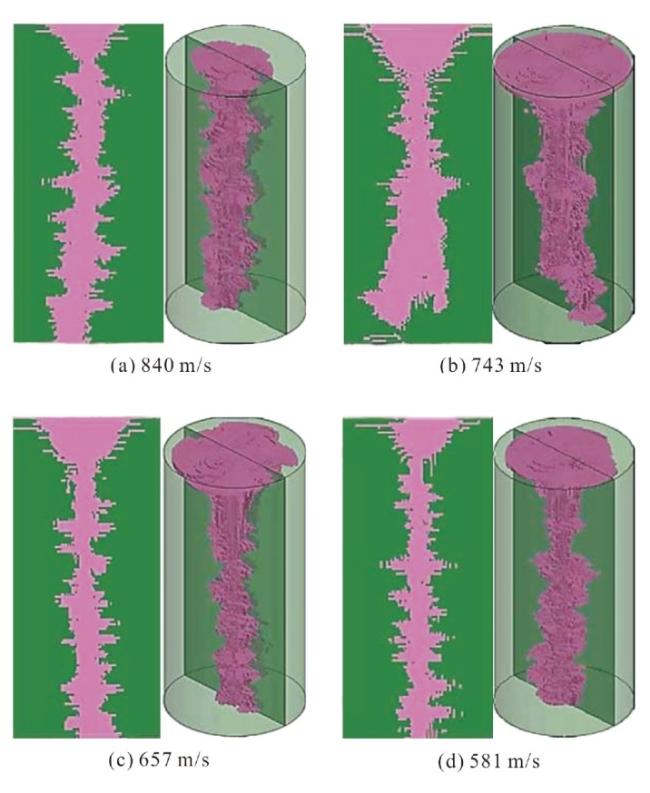
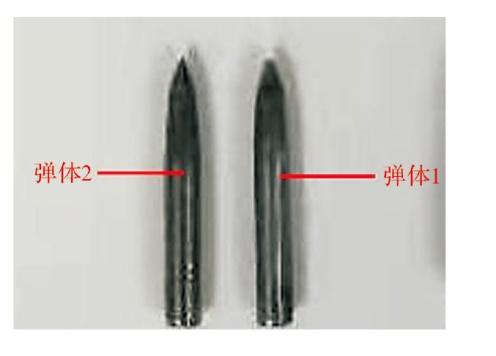
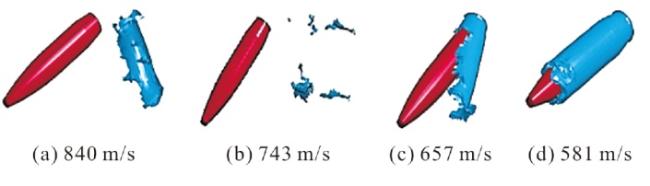
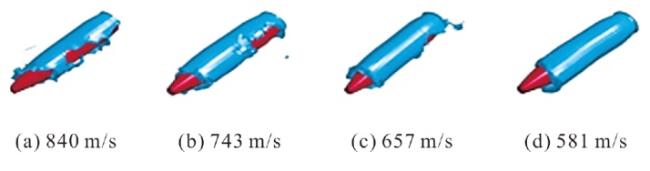
对比4种计算工况,随着弹体着靶速度的降低,弹体偏转程度减小,侵彻隧道变得较为平直且宽度均匀。弹体在侵彻结束后的状态如图15所示。随着着靶速度降低,披甲的脱离程度降低,着靶速度为840 m/s和743 m/s时,在高速侵彻下,部分被甲被撕裂,脱离弹体形成碎片披甲完全脱离弹芯,并出现了严重的破坏。当弹体着靶速度降低后,弹体在侵彻过程中的偏转程度减弱,因此当着靶速度为657 m/s时,披甲呈现即将脱离钢芯的状态,而当着靶速度为581 m/s时,被甲仅出现头部的侵蚀破坏,此时弹体剩余皮甲质量约为0.61 g。弹体弹芯在不同着靶速度侵彻过程中均保持较为完整的形态,没有出现明显破坏痕迹。
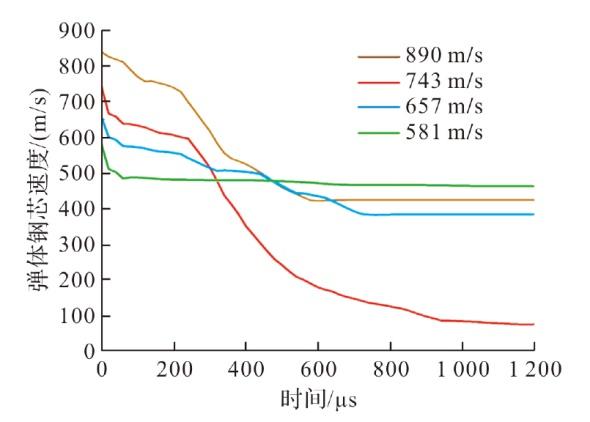
弹体在侵彻过程中钢芯的速度变化曲线如图16所示。对比图中曲线,弹体着靶速度为581 m/s时,弹体未发生明显的偏转,因此弹体的速度变化较其余的工况下较小,侵彻结束后弹体钢芯的剩余速度为463.6 m/s,速度损失20.2%。随着着靶速度的增加,由于侵彻过程中稳定性逐渐减弱,弹体偏转,导致弹体速度出现大幅度降低。657 m/s、743 m/s、840 m/s 着靶速度下的弹体侵彻,在侵彻结束后,弹体钢芯速度损失比分别为41.6%、90.0%、49.5%。弹体以743 m/s的速度着靶时,弹体的偏转最为严重,弹体由垂直方向侵彻偏转为接近水平方向,因此速度损失最大。根据速度图像可知,在弹体未发生较大偏转的情况下,弹体在侵彻过程中的速度损失比随侵彻着靶速度的减小而减小。但在侵彻开坑阶段,弹体钢芯的速度衰减随着靶速度的减小而增大,表2所示为弹体在不同着靶速度下侵彻开坑时弹体钢芯的速度损失比,随着弹体着靶速度的减小,弹体钢芯在着靶阶段的速度损失比呈现增加的趋势。
弹体钢芯的减加速度变化曲线如图17所示。743 m/s、657 m/s与581 m/s的着靶速度下,弹体钢芯受到的减加速度与840 m/s着靶速度时存在显著差距。由于侵彻着靶速度的减小,弹体在侵彻开坑阶段的速度损失增大,因此弹体钢芯在此阶段的减加速度变化较大。侵彻开坑阶段结束后,弹体的速度变化趋于平缓,钢芯受到的减加速度减小。743 m/s着靶速度下弹体偏转较为严重,因此在坑下侵彻阶段,弹体钢芯受到的减加速度的值再次升高。
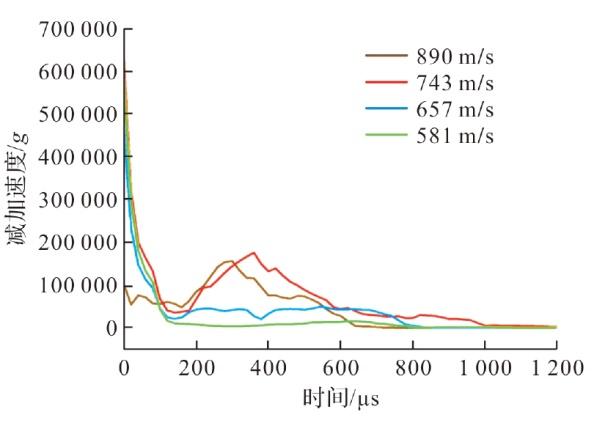
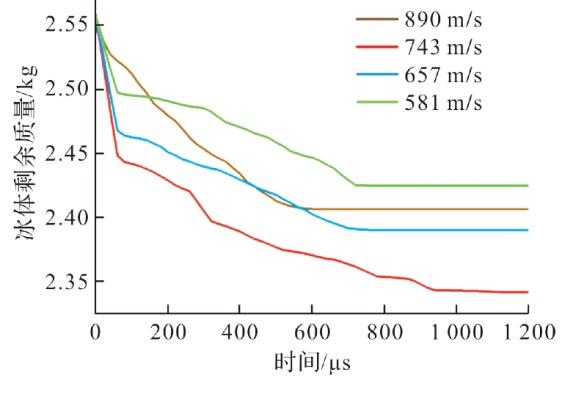
图18为不同着靶速度下冰体质量变化曲线,随着侵彻着靶速度降低,坑下侵彻阶段冰体的质量损失速率减小。侵彻开坑阶段的冰体质量损失速率随侵彻速度的增加整体上呈现将先增加后减小的趋势。当弹体的侵彻速度为743 m/s时,冰体在开坑阶段的质量损失占到总质量损失的52.8%。当弹体着靶速度在一定范围内,冰体的质量损失主要集中于侵彻开坑阶段。
4 冰体厚度改变对冰体的侵彻毁伤
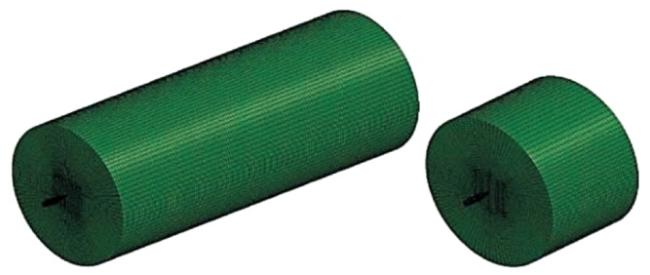
在破冰弹药的设计及实际使用过程中,冰体与弹体的长度比例不会过高。因此10 cm厚度冰体的侵彻毁伤效应进行研究。
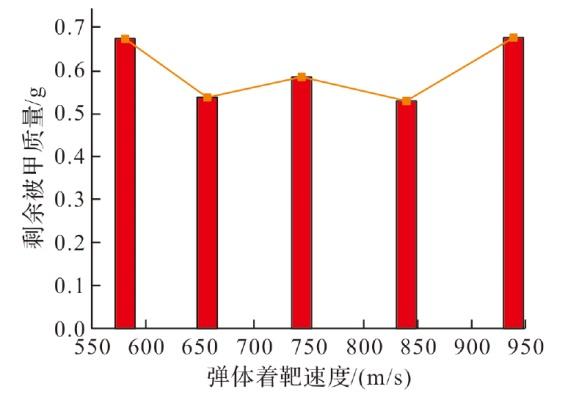
弹体完全穿冰后的形态如图20所示,弹体侵彻路径较短,因此披甲破坏程度明显较35 cm冰体轻,被甲剩余质量的变化如图21所示。弹体在侵彻10 cm厚度冰体过程中,弹体头部为主要侵彻部位,因此弹体头部的侵蚀磨损严重,头部被甲卷曲变形,且在高速侵彻下,部分被甲被撕裂,脱离弹体形成碎片。当弹体在侵彻出现偏转后,会导致弹体被甲一侧的破坏加剧。当弹体着靶速度降低后,弹体偏转程度减小,如弹体以581 m/s的着靶速度侵彻时,弹体除头部被甲外均保持较好形态,未出现严重的侵蚀破坏。因此对于破冰弹的设计,应当增大侵彻重点部位的强度与厚度,以减轻对破冰弹体内部的破坏,同时适当控制弹体侵彻速度,以抑制弹体的侵彻偏转,减轻弹体的破坏。
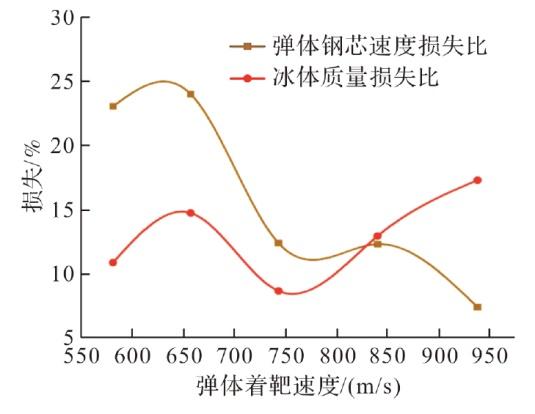
弹体钢芯的速度损失比与冰体的质量损失比如图22所示,随着侵彻着靶速度的增加,弹体钢芯的速度损失比呈现下降的趋势,而冰体的质量损失比呈现波动变化。当弹体着靶速度大于750 m/s时,着靶速度越大,则弹体对冰体造成的质量损失越大。弹体着靶速度在850 m/s以下时,弹体钢芯的速度损失比与冰体质量损失比的变化趋势一致。


5 结论
1)弹体高速侵彻35 cm冰靶体时在开坑阶段的速度损失比与弹体受到的减加速度随着靶速度的减小而增加。随着弹体着靶速度的降低,侵彻过程中的弹体偏转被抑制,弹体侵彻稳定性增强,弹体偏转程度减小,弹体侵彻过程中的速度损失比减小,冰体的剩余质量呈现先减小后增加的趋势。
2)弹体在高速侵彻10 cm冰体时,侵彻过程与侵彻35 cm厚度冰体初期相似。弹体被甲在840~657 m/s的速度范围侵彻冰体时受到的侵蚀破坏程度较大;随着弹体着靶速度增加,侵彻结束时弹体的速度损失比呈现下降趋势,而弹体的质量损失比波动变化;当弹体着靶速度大于750 m/s时,着靶速度越大,弹体对冰体造成的质量损失越大。
3)着靶速度为弹体侵彻冰体过程中失稳偏转的主要原因。着靶速度越大弹体越容易失稳,从而增加披甲破坏程度。同时,弹体的运动路径越长,弹体披甲的破坏程度也越严重。
4)建议增大侵彻重点部位的强度与厚度,以减轻对破冰弹体内部的破坏,同时适当控制弹体侵彻速度,以抑制弹体的侵彻偏转,减轻弹体的破坏。由于试验条件以及气候条件的影响,冰体尺寸没有做到足够大,不同水域的冰体存在一定差异,因此可以对不同种类冰体进行试验研究,同时也可以对不同影响因素及变量进行分析。